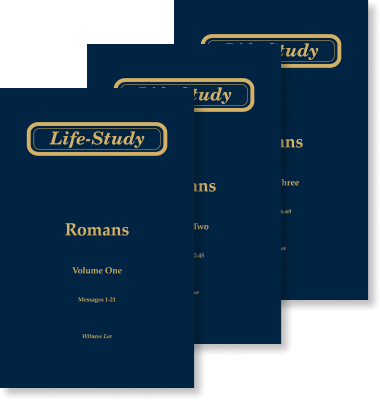
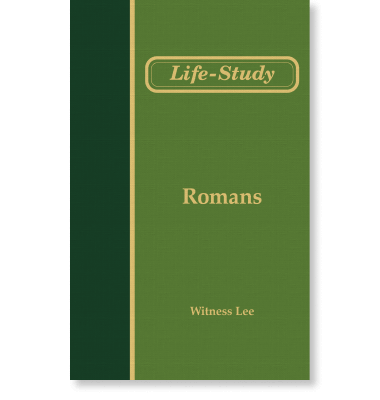
The purpose of the Life-study of the Bible, as expressed by Witness Lee, is to present the truths contained in the New Testament, to minister the life supply, to solve the common and hard problems found in the New Testament, and to open up every book of the New Testament by giving a thorough interpretation of it. We believe that these volumes, containing the very essence of the New Testament ministry which is for the carrying out of God’s divine economy, will serve as an entrance into a deeper and extensive understanding of the divine truths and will also render much life supply and nourishment to the church of God today and in the coming generations. May the Lord use the ministry of His word in these volumes to sanctify the church until she is fully prepared to be His bride, His counterpart, for His satisfaction (Eph. 5:26-27).
The church’s knowledge of the Lord and His truth has been continually progressing. The Life-study of the Bible, a monumental and classic work by Witness Lee, builds upon and is a further development of all that the Lord has revealed to His church in the past centuries. It is filled with the revelation concerning the processed Triune God, the living Christ, the life-giving Spirit, the experience of life, and the definition and practice of the church.
Read, Search, and Listen Online
Life-study of the Bible is available to read online at ministrybooks.org, with or without a subscription. A subscription, however, allows you to search the text, add bookmarks, highlight meaningful passages, keep track of your reading, and listen to audiobooks of all the messages.
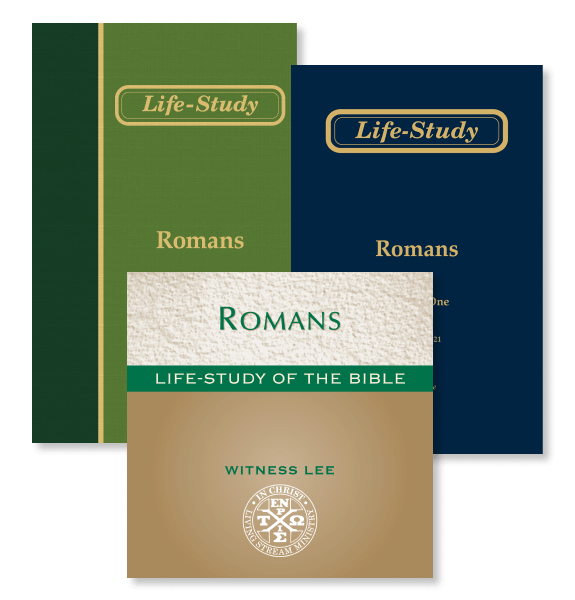
Many today view the Bible in various ways, but few have ever considered the Bible as a romance. In this eBooklet taken from Life-study of Romans, Witness Lee shows from both the Old and New Testaments that the Bible is a romance in the purest and holiest sense. It presents the love relationship between a universal couple—God in Christ as the Bridegroom and His redeemed people as His Bride.
Christians are accustomed to saying that there are four Gospels: the books of Matthew, Mark, Luke, and John. However, Paul also refers to his Epistle to the Romans as a gospel. In this eBooklet taken from Life-study of Romans, Witness Lee opens up the subjective gospel in this crucial Epistle of Paul. The gospel in the first four books of the New Testament concerns Christ in the flesh as He lived among His disciples before His death and resurrection. The gospel in Romans concerns Christ as the Spirit of life who indwells the believers after His resurrection for their sanctification, transformation, and glorification in the divine life. This is something deeper and more subjective than the Christ in the Gospel.
Most people judge matters according to the principle of good and evil. In the Bible, however, good and evil are introduced not as distinct categories but as parts of the same category. The Bible reveals that instead of being occupied with the concept of good and evil, we should be concerned about life and death. To be in life is to live out God, and to be in death is to live out Satan. In this booklet taken from the Life-study of Romans, Witness Lee presents from Scripture the line of life, the line of death, the universal battle between God as the source of life and Satan as the source of death, and the Christian’s place in this battle.
John 3:16 says that because God loved us, He gave His only begotten Son so that everyone who believes in Him should not perish, but have eternal life. This verse indicates that God saves us because He loves us. Furthermore, in Ephesians 2:5 and 8 we are told that we are saved by grace. The book of Romans, however, reveals that we are saved by righteousness. In this eBooklet, compiled from Life-study of Romans, Witness Lee explains why righteousness is the power of the gospel and why righteousness is necessary in order for God to produce many sons through the gospel.
God’s salvation is not only a salvation from sin but also a salvation in His divine life. For this reason, the New Testament speaks of being saved in life, walking in newness of life, and even reigning in the life of God. In this eBooklet, compiled from Life-study of Romans, Witness Lee presents the law of the Spirit of life in Romans 8:2 as the key to experiencing the life of God in His full salvation.
Every kind of life has a law—a natural power with a certain tendency and activity. In Romans 7 and 8 the apostle Paul speaks of three laws, which correspond to three lives: the human life, the satanic life, and the divine life. In this eBooklet, compiled from Life-study of Romans, Witness Lee explains these three lives and laws that operate in every believer. The secret of the Christian life, he shows, is to activate the right life with the right law.
In this booklet taken from Life-study of Romans, Witness Lee speaks concerning the four aspects of condemnation in Romans: condemnation on mankind in general (1:18-32), on the self-righteous in particular (2:1-16), on the religious specifically (2:17-3:8), and on all the world totally (3:9-20). The whole world is subject to the righteous judgment of God. This section on condemnation paves the way for God’s salvation and opens the door for people to enter into God’s salvation. “Paul’s intention in the section on condemnation was to prepare the way for him to minister Christ into us. The ultimate goal of Paul’s gospel is to minister Christ into us.”
The first three chapters of Romans unveil our need for God’s salvation, showing that we are helpless, hopeless, and under God’s condemnation. The epistle then goes on to show the accomplishment of God's salvation, first through justification. Justification is related to propitiation, redemption, and reconciliation. In this booklet taken from Life-study of Romans, Witness Lee covers all these terms in a clear way.
In this booklet taken from Life-study of Romans, Witness Lee considers Abraham as an example of justification. “Justification may appear to be a doctrinal matter, but the Apostle Paul, along with the doctrine of justification, gives us a living example of it—the person of Abraham (4:1-25). In this booklet we will consider Abraham, the example of justification. He is our model, our pattern. The name Abraham means ‘father of a multitude.’ According to the Scriptures, Abraham was the father of both the Jews and the believing Gentiles (Rom. 4:11-12, 16-17; Gal. 3:7-9, 29). Whoever is of faith, whether Jew or Gentile, is a descendant of Abraham.”
In this booklet compiled from Life-study of Romans, Witness Lee opens up Romans 4 and the matter of subjective justification. Romans 4 reveals God’s subjective and dispositional justification through the history of Abraham. “If we enter into the depths of this chapter, we will see it reveals that adequate, living justification is God’s deeper work in calling fallen people out of everything other than God and bringing them back to Himself.”
In this booklet taken from Life-study of Romans, Witness Lee considers Romans 5:1-11. “Romans 5:1-11 should be regarded as the conclusion of Paul’s teaching on justification. This conclusion reveals the result, the issue of justification. These eleven verses enumerate many wonderful items that are the outcome of our being justified by God.”
In this booklet compiled from Life-study of Romans, Witness Lee presents the contrast between our heritage in Adam and the gift we have in Christ. “What are the items of our inheritance in Adam? Two dreadful things—sin and death. Regardless of whether we are good or bad, as long as we were born of Adam’s race we have sin and death as our heritage. Praise God for the gift in Christ! The gift in Christ surpasses the heritage in Adam.”
Since we all were born in Adam, how can we say that we are now in Christ? In this booklet compiled from Life-study of Romans, Witness Lee answers this question and fellowships concerning the major turn that occurs in Romans 5. “Romans 5:12 marks a major turn in Paul’s writing in the book of Romans. This turn is from sins to sin, from position to disposition, and from justification to sanctification, or we may say from salvation to life.”
Romans speaks of our being freed from the law, but in order to understand this matter, we must know the two husbands in Romans 7. “As a young Christian I was eager to know the Bible. I found it especially difficult to learn who was the first husband in Romans 7… Now, after many years of study and experience, this matter is clear.” In this booklet taken from Life-study of Romans, Witness Lee considers the two husbands in Romans 7 with the entire Bible in view, “for we should understand one verse of the Bible according to the Bible as a whole.”
Romans 7:22-23 says, “For I delight in the law of God according to the inner man, but I see a different law in my members, warring against the law of my mind and making me a captive in the law of sin.” In this booklet taken from Life-study of Romans, Witness Lee fellowships concerning the three laws seen in these verses and the role they play in our Christian life.
In this booklet compiled from Life-study of Romans, Witness Lee presents the contrast between Romans 8 and Romans 7. “In Romans 7 we see the bondage of the law in our flesh, and in Romans 8 we see the freedom of the Spirit in our spirit. As we come to chapter eight, we turn from bondage in the flesh to freedom in the Spirit.”
In this booklet taken from Life-study of Romans, Witness Lee considers Romans 8:7-13. “Although in Romans 8:1-6 we clearly see the freedom of the law of the Spirit of life, it is difficult to see the central point of the next seven verses. However, if we enter deep into the thought of this portion, we will see that in it Paul is trying to tell us that something other than sin has its lodging within us… According to Romans 8, what indwells us? It is Christ, the indwelling Christ.”
In this booklet compiled from Life-study of Romans, Witness Lee presents the matter of sanctification. “From the beginning of the book of Romans through 8:13 two main things are covered: justification and sanctification. In justification God gives us His righteousness, which is Christ Himself…. In the second stage, sanctification, God is working Christ into us to make Him our sanctification subjectively. Our whole being will be permeated with the holy nature of God. This is sanctification in life.”
In Romans chapter 8, Paul speaks of the sons of God, the children of God, and heirs of God. Why does Paul use all three terms? What is the distinction, and how does it concern us? In this booklet taken from Life-study of Romans, Witness Lee answers these questions and presents the blessings of sonship: the Spirit of sonship, the witnessing of the Spirit, the leading of the Spirit, the firstfruit of the Spirit, the helping of the Spirit, and the interceding of the Spirit.
In this booklet taken from Life-study of Romans, Witness Lee fellowships concerning our need of conformation and God’s way of molding us “to the image of His Son” (Rom. 8:29). “God has determined our destiny beforehand, and this destiny can never be fulfilled without the divine arrangement which causes all things to work together for us. Our destiny is to be conformed to the image of the firstborn Son of God.”
In this booklet taken from Life-study of Romans, Witness Lee fellowships concerning Romans 9 and God’s selection: “God’s selection is our destiny. Our eternal destiny has been fully established by God’s selection. This selection and destiny are of the very God who calls, not of those who work. Our selection is absolutely of God who calls. In order to grasp this point we need to read and comment on Romans 9:1-13.”
In this booklet taken from Life-study of Romans, Witness Lee fellowships concerning Romans 9 and 10, which reveal that we are vessels and give us the way to be filled with the riches of Christ. “We were made vessels to contain Him; we were selected and predestinated to be His containers. This requires our cooperation in receiving Him and taking Him in. In order to do this we need to open ourselves from the depths of our being and call upon Him with our mouth from deep within our spirit.”
In this booklet taken from Life-study of Romans, Witness Lee considers what is seen in Romans 9—11 concerning God’s selection: a remnant reserved by grace, the nations saved, and Israel restored. “God’s selection is according to Himself, according to His choice, not according to anything else. All things are of Him, by Him, and for Him. ‘To Him be the glory for ever. Amen.’”
In this booklet taken from Life-study of Romans, Witness Lee begins a series of messages on “the most practical section in the book of Romans,” that is, Romans 12:1—15:13, the section on transformation. Transformation is for the practice of life, and the Bible reveals that the practice of life is mainly with the church, with the Body of Christ. Many Christians truly love the Lord and pursue the growth of life according to Romans 6 and 8. However, the book of Romans continues beyond these chapters, indicating that even if we attain the standard in Romans 8, we still are lacking if we do not have the Body life. “What is the main item, the main aspect, of a believer’s behavior? It is the church life, the Body life.”
In Romans 12:6 Paul says that we have “gifts that differ according to the grace given to us.” What is grace? And what are these gifts? In this booklet taken from Life-study of Romans, Witness Lee answers these questions and discusses the relationship between the gifts in Romans 12 and the Body of Christ.
In this booklet taken from Life-study of Romans, Witness Lee presents the normal living seen in Romans 12:9 through 13:14. “Without the living of such a normal life, we are lacking the necessary base for the church life. I believe that this was the reason that, immediately after describing the practice of the church life, Paul presents the requirements of the living of a normal human life. The best presentation of the normal living in the entire Bible is found in these verses.”
At the end of Romans 13, the church life has been portrayed and the Christian life has been defined. However, there is still a great need. Romans 14 reveals that we must take care of the matter of receiving the other believers. In this booklet compiled from Life-study of Romans, Witness Lee presents the matter of receiving the believers for the church life: “We need to exercise the discernment which is derived from the practicing of the church life and the living of a normal Christian life.”
In this booklet taken from Life-study of Romans, Witness Lee speaks on Romans 14:13-15, where Paul gives a word about receiving the believers. This significant matter is related to both the judgment seat in the future and the kingdom life in the present. “If we receive the believers in love, we shall not judge others, not put stumbling blocks before them, not grieve the brothers, not destroy the man for whom Christ died, but rather walk according to love. We must receive in the principle of love all the believers for whom Christ died.”
In this booklet taken from Life-study of Romans, Witness Lee points out particular “hidden, concealed treasures” found in Romans 15:14—16:27. “In this last section of Romans Paul shows us some experiential and practical matters. He presents a full unveiling of the ultimate consummation of the gospel. I use the word ‘unveiling’ because so many of the precious things have been veiled. I want to point out some of the treasures that are hidden and concealed in the last section of Romans.”
In this booklet taken from Life-study of Romans, Witness Lee reviews the progressive revelation of God in the book of Romans, from creation to the Body of Christ, and gives a word on the importance of the churches as the practical expression of the Body of Christ.
In this booklet compiled from Life-study of Romans, Witness Lee gives an overview of the basic thought and major sections of Romans and fellowships over eight particular points: personal salvation, the expression of Christ, our deeds being exposed, our constitution as sinners, righteousness being reckoned to us, holiness being worked into us, being glorification with God’s glory, and the heart of God.
In this booklet taken from Life-study of Romans, Witness Lee considers two facts and two experiences seen in Romans: the facts of being in Adam and being in Christ, and the experiences in the flesh and in the spirit. “The experience in the flesh is the experience of the fact of being in Adam. The fact of being in Adam revealed in chapter five is experienced in the flesh as described in chapter seven…Likewise, the experience in the spirit in chapter eight is the experience of the fact of being in Christ revealed in chapter six. In other words, the fact of being in Christ can be experienced only in the spirit.”
In this booklet compiled from Life-study of Romans, Witness Lee presents four main points from Romans chapters five through eight. The main point in chapter five is related to what we are—sinners. Because we are such sinners, we have the problems of sin, the law, and the flesh. The main points in chapters six through eight reveal these problems and the way to be freed from them.
In this booklet taken from Life-study of Romans, Witness Lee fellowships concerning what the apostle Paul calls “this death” (Rom. 7:24) and way to be freed from “this death”—the indwelling Christ. We all have the elements of sin and death within us. But thank the Lord, we also have the indwelling Christ! The more we let Christ indwell us, the more we are freed from death. “This word may be rather simple and brief, but if we practice and experience it, we shall see that it is unlimited, unfathomable, deep, and profound.”
In chapters five through eight of his Epistle to the Romans, Paul speaks several times about the matter of death. He is not speaking merely of the kind of physical death that causes us to die and be buried. Rather, this death has inward symptoms, such as darkness, uneasiness, unrest, and dissatisfaction. But Paul also gives us the way to be freed from this death, and in this booklet compiled from Life-study of Romans, Witness Lee fellowships concerning the way.
In this booklet taken from Life-study of Romans, Witness Lee presents the connection between Romans 8 and John 15. “Although John 15 tells us to abide in Christ, it does not present the way to abide. As we shall see, the way to abide in Christ is found in Romans 8, which is a progression from John 15.”
In this booklet taken from Life-study of Romans, Witness Lee gives an overview of what it means to be “saved in His life” (Rom. 5:10) and fellowships particularly concerning being saved from sin and worldliness.
Paul’s Epistle to the Romans reveals that we are saved in the life of Christ (5:10). In this booklet taken from Life-study of Romans, Witness Lee continues his consideration of what that means in our experience. “Along with being saved from sin and from worldliness, we need to be saved in life from naturalness. This means that we need to be transformed. We need not only an outward change, but also an inward change. This inward change is called transformation.”
Through Christ’s redemption we have been justified by God and reconciled to Him, and there is now nothing between us and God. However, we still have a number of subjective problems, including our individualism. Thus, we still need to be saved in Christ’s life. In this booklet taken from Life-study of Romans, Witness Lee fellowships concerning our need to be saved from being individualistic and God’s desire to have a corporate Body for Christ.
In Romans 14 Paul covers the matter of receiving the saints, but the fact is that there is much divisiveness among today’s Christians. In this booklet compiled from Life-study of Romans, Witness Lee considers the way we are saved from such divisiveness in the life of Christ. “If we want to be saved from divisiveness, we need to grow. The greater our measure of Christ, the less divisive we shall be.”
Every human being is a self, and self-likeness is the expression of that self. Self-likeness, the expression of the self, is not the expression of Christ. The expression of Christ comes only out of the life of Christ. In this booklet compiled from Life-study of Romans, Witness Lee fellowships concerning our need to be saved in the life of Christ from self-likeness and be conformed to the image of the Son of God.
Subscribe to Receive Periodic Announcements Including Free Offers
Your email address will not be shared with or sold to any third parties.
 Living Stream Ministry




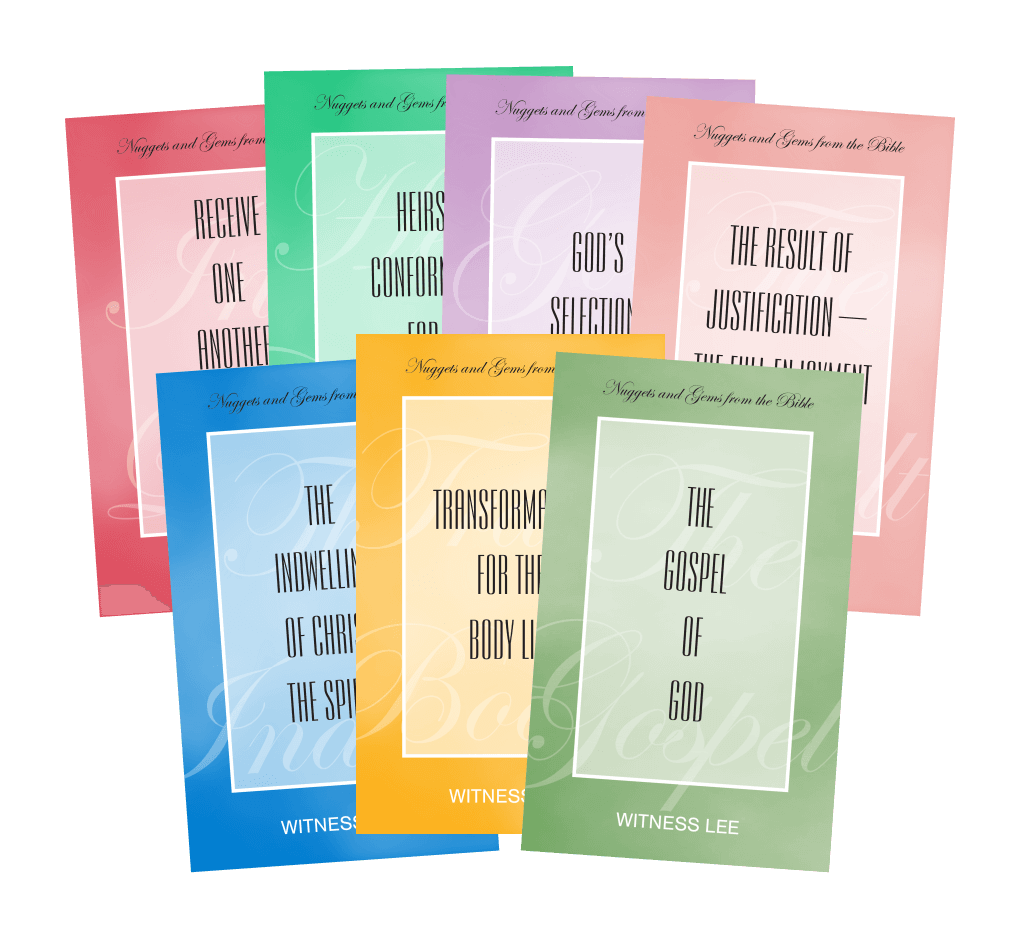 The Gospel of God
 The Bible—a Romance of a Universal Couple
 The Gospel of God
 Condemnation—the Need of Salvation
 Justification in God’s Way
 The Example of Justification
 Subjective Justification
 The Result of Justification—the Full Enjoyment of God in Christ
 The Gift in Christ Surpassing the Heritage in Adam
 Identification with Christ
 The Two Husbands in Romans Seven
 The Three Laws in Romans Seven
 The Law of the Spirit of Life
 The Freedom of the Spirit in Our Spirit
 The Indwelling of Christ as the Spirit
 Sanctification in Life
 The Blessings of Sonship
 Heirs Conformed for Glorification
 The Goal of God’s Selection—Vessels to Express Him
 God’s Selection—Our Destiny
 God’s Economy in His Selection
 Transformation for the Body Life
 Gifts of Grace in Life
 A Normal Living for the Church Life
 Receiving the Believers for the Church Life
 Receive One Another in Love
 The Consummation of the Gospel—the Practical Church Life
 The Progressive Revelation of God
 From Sinners to Sons to Form the Body of Christ
 Out of Adam into Christ
 Freed from Sin, the Law, and the Flesh
 Freed from Death by the Indwelling Christ
 Freed from Death by Being in the Spirit
 Living by the Law of Life
 A Universal Battle—Life versus Death
 Abiding in Christ by Minding the Spirit
 Saved in His Life—from Sin and Worldliness
 Saved in His Life—from Naturalness
 Saved in His Life—from Individualism
 Saved in His Life—from Divisiveness
 Saved in His Life—from Self-likeness
 Righteousness—the Power of the Gospel